PRESS RELEASE
This is a citizen-led public service campaign
Note: Submissions For The HSNO Bill Close June 15, 2026
May 24 2026
New Zealand Citizens Raise Alarm Over Fast Tracking the Hazardous Substances And New Organisms Amendment Bill
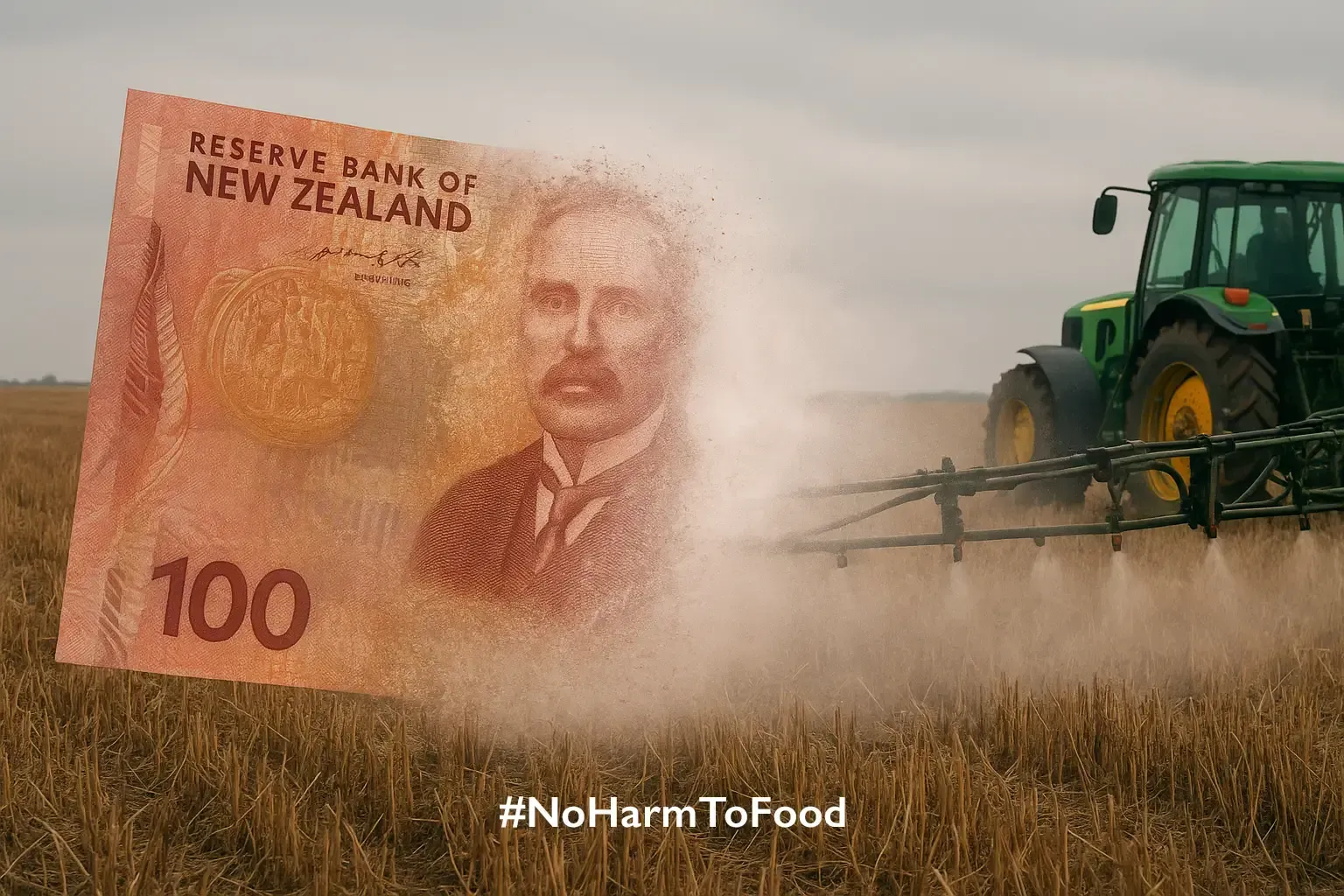
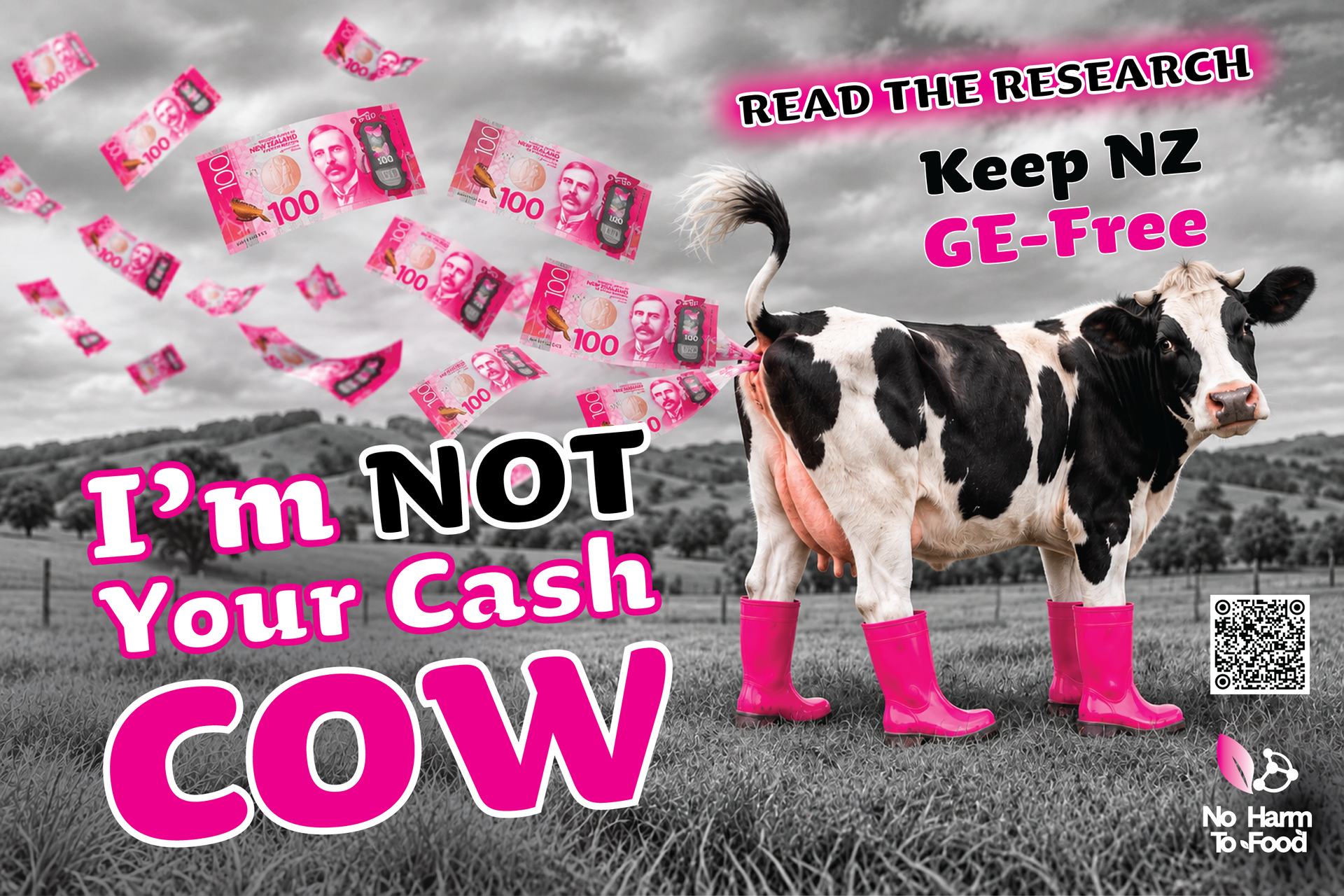
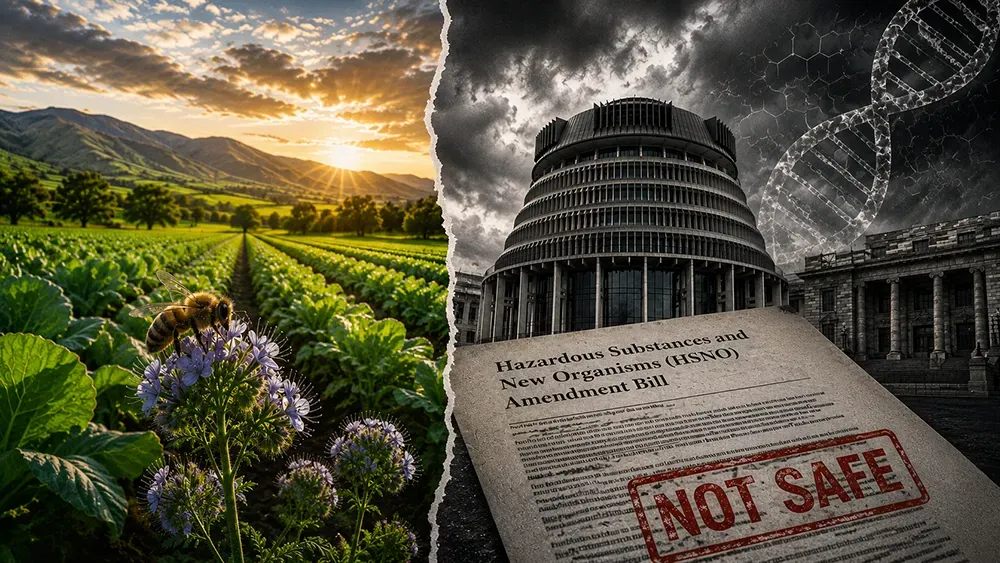
A growing New Zealand citizen-led awareness campaign under the hashtag #NoHarmToFood is raising concerns about the proposed Hazardous Substances and New Organisms Amendment Bill, warning that the legislation would weaken oversight of genetically modified organisms (GMOs), hazardous substances, and agricultural chemical approvals in New Zealand.
The bill proposes major changes to the Hazardous Substances and New Organisms (HSNO) Act 1996, including expanded "rapid assessment" and "light-touch" approval pathways, greater reliance on overseas regulators, and reduced automatic public notification requirements for some applications.
The lengthy bill, which is difficult to decipher, contains undemocratic legislation because it removes food sovereignty by allowing more powers to be delegated to the chief executive or the Authority's delegates.
> Read the full release
PRESS RELEASE
This is a citizen-led public service campaign
May 2026
Kiwis Continue Opposition to Gene Technology Bill and Glyphosate Residue Increases
Campaigners behind the No Harm To Food NZ movement are continuing to urge New Zealanders to contact their MPs regarding two major food-related policy issues: the Gene Technology Bill and increased glyphosate residue limits in food.
The Gene Technology Bill would allow GMOs in NZ in real-life practice, including within New Zealand’s soil and food production systems. Opponents are calling for stronger protections for organic agriculture, biodiversity, and food transparency.
At the same time, concerns remain over approved glyphosate residue increases for dry field peas. While proposed increases for cereals such as wheat remained at previous limits following public submissions, authorities approved a residue limit of 6 mg/kg for dry field peas — 60 times higher than the previous limit of 0.1 mg/kg.
Campaign supporters are encouraging the public to continue contacting MPs and advocating for organic and lower-chemical food production practices in New Zealand.
Concerns have also been raised about processed pea-based foods, including pea flour, pea protein products, snacks, supplements, and sauces, which may be produced using imported or locally grown dry field peas subject to the higher residue limit.
“This is ultimately about public awareness, food standards, and the long-term health of New Zealand communities and ecosystems,” the campaign states.
Information and MP contact templates are available at:
ORIGINAL PRESS RELEASE
This is a citizen-led public service campaign
Aug 2025
Kiwis Unite to Stop New Zealand Bills Threatening Food Safety and Organic Produce
A nationwide petition has been launched using #NoHarmToFood, opposing two government proposals that would undermine public health, food safety, and could hurt New Zealand’s clean, green economy:
- THE GLYPHOSATE INCREASE BILL would increase allowable glyphosate residue levels in food by up to 100 times in some cases. Glyphosate is sold under many brand names in NZ, including Roundup.
- THE GENE TECHNOLOGY BILL would deregulate oversight for certain gene-edited food products, potentially allowing pesticide-resistant genetically modified organisms (GMOs) in the food system and soil with minimal regulation.
“This petition is driven by concern for the well-being of New Zealanders and the long-term health of our environment and food industry,”
Public Awareness Gap
Awareness is limited because, while the organic sector is worth about NZ$1.8 billion annually (2025 Organic Market Report), many Kiwis can’t afford to buy organics regularly. They may miss news circulating within organic and sustainability circles.
But NZ home gardeners often reject chemical sprays and genetically engineered foods. ‘Spray-free’ produce is in demand at local and online markets. Organic, GE, and market group sectors actively promote these choices, and the turnout and social media comments for Green Expos, which draw tens of thousands of attendees each year, demonstrate a strong and growing public interest.
Health & Environmental Concerns
Independent scientific research has documented risks from glyphosate and deregulated gene editing:
- A 2025 peer-reviewed study (Panzacchi et al., Environmental Health) found increased rates of leukaemia, thyroid, breast, and liver tumours in animals exposed to glyphosate at levels below current “safety” limits.
- Other studies link glyphosate to hormone disruption, gut microbiome damage, oxidative organ injury, a 41% higher risk of non-Hodgkin lymphoma, prenatal neurodevelopmental harm, and neurological symptoms such as depression and memory loss.
- Glyphosate residues have been found in 99% of pregnant women tested in the US, with higher levels tied to premature births. Pillay et al. (2022).
International bans/restrictions:
- Many countries have restricted or banned glyphosate and pesticide-resistant GMOs. Some have implemented full bans, while others limit its use in public areas, households, or for crop drying.
- Evidence from Argentina — where GM crops and glyphosate use are widespread — shows elevated cancer rates, congenital disabilities, and widespread environmental contamination.*
Economic Risks
The Sustainable Business Council’s members collectively represent NZ$169 billion in annual turnover, reflecting the significant economic scale of businesses committed to sustainability in NZ.
These bills could threaten key sectors:
- Sustainable construction: NZ$5 billion/year, projected NZ$142 billion by 2050, dependent on healthy biodiversity and uncontaminated natural resources. Note that the projected NZ$142 billion is a future estimate contingent on sustained efforts and healthy ecosystems.
- Responsible investment: NZ$153.5 billion in ESG-aligned funds, with NZ$4.74 billion in impact investments. Many exclude high chemical/GMO exposure; these changes could trigger divestment.
Sustainable tourism:
Toursim contributes around NZ$40 billion annually to New Zealand’s economy. The sustainable and eco-tourism sectors are growing rapidly. The New Zealand sustainable tourism market is projected to grow from USD 12.7 million in 2025 to USD 57.7 million by 2035, representing a Compound Annual Growth Rate (CAGR) of 16.3%. This growth is driven by rising global demand for environmentally responsible travel, government initiatives promoting sustainability, and the tourism industry’s efforts to reduce its environmental impact.
These sectors depend heavily on New Zealand’s clean environment, biodiversity, and food integrity to attract discerning international visitors. Pristine landscapes and natural food systems, prized especially in markets sensitive to GMOs such as the EU and Japan, are key assets for sustaining this growth.
The petition calls for:
- No increase in glyphosate residue limits — and phased reductions.
- A shift toward organic, regenerative, and chemical-free farming.
- Protection of New Zealand’s food integrity, export reputation, and sustainable industries.
“NZ already faces high rates of certain cancers,” the petitioner says. “It’s reckless to increase chemical exposure or undermine the food brand our farmers have built over decades.”
A non-partisan, volunteer-led campaign grounded in science.
Sign the petition: www.change.org/noharmtofood
Condensed: www.facebook.com/NoHarmToFoodNZ
_________
Sources:
Sustainable Business Council, NZ Industry Reports (2023).
The Sustainable Business Council
“Our businesses believe that we have an opportunity to set New Zealand on the path towards an exciting future, which is prosperous, sustainable, regenerative, zero carbon*, and where all New Zealanders thrive. Businesses at the forefront of sustainability are embracing responsible practice, resilience, and regeneration.”
https://sbc.org.nz/about-us/?utm_source
Panzacchi et al., Environmental Health, 2025.
https://ehjournal.biomedcentral.com/articles/10.1186/s12940-025-01187-2
Schinasi, L. & Leon, M.E. (2014). “Non-Hodgkin lymphoma and occupational exposure to agricultural pesticide chemical groups and active ingredients: a systematic review and meta-analysis.” International Journal of Environmental Research and Public Health, 11(4), 4449–4527. https://doi.org/10.3390/ijerph110404449
Avila-Vázquez et al., Monte Maíz health study (2016). https://www.scirp.org/html/4-6703530_83267.htm
Tourism
https://www.futuremarketinsights.com/reports/new-zealand-sustainable-tourism-market?utm_source=chatgpt.com
Boston Consulting Group, Megatrends in Detail: The Green Economy Presents Significant Opportunities to Supercharge New Zealand (2023).
https://www.bcg.com/publications/2023/observing-megatrends-new-zealand-green-economy
Responsible Investment Benchmark Report 2023 Aotearoa New Zealand
https://www.responsibleinvestment.org/research-and-resources/type/benchmark-reports?utm_source
Investments:
*World Refs. Find on the petition: www.change.org/noharmtofood
ENDS
Public NZ Preference Investment Practice
Across multiple environmental and social issues, public
exclusion preferences consistently exceed 80%:
75% want to avoid investing in companies involved in genetic engineering (GMOs).
Shows public opposition to GMOs, directly supporting resistance to the Gene Technology Bill that would deregulate oversight of gene-edited agricultural products.
89% want to avoid sectors linked to environmental degradation (air, land, and water damage).
Strengthens the case against the Glyphosate Increase Bill, as glyphosate use is tied to soil degradation, biodiversity loss, and water contamination.
92% want to avoid investments tied to human rights abuses
Highlights public concern for ethical supply chains, relevant to farming practices in GMO/chemical-intensive agriculture that often exploit workers globally.
91% want to avoid labour rights violations
Reinforces that NZ cares about fair labour, which can be undermined in industrial agriculture reliant on high chemical inputs.
85% reject violations of Indigenous peoples’ rights
Links to Māori land, water, and food sovereignty concerns — relevant to protecting Indigenous rights from industrial agricultural expansion.