Why New Zealanders Oppose Genetic Engineering and the HSNO Amendment Bill
New Zealand is currently a GE-free country.
For decades, New Zealand has maintained its status and built an international reputation for clean food production, strong biosecurity standards, and high environmental protections. However, proposed changes through the Hazardous Substances and New Organisms (HSNO) Amendment Bill have raised horror among New Zealanders who know these changes would forever alter the country's approach to genetic engineering and put New Zealand's GE-free status at high risk.
Many New Zealanders are concerned that supporters of these legislative changes are underestimating the potential risks and long-term consequences for New Zealand's food system, environment, and international reputation.
Some supporters of these legislative changes have financial interests connected to agriculture, biotechnology, or chemical-dependent farming systems. Others may simply have a different understanding of the risks involved. Regardless of motivation, many New Zealanders remain deeply concerned about the long-term consequences for public health, biodiversity, food sovereignty, and the future of organic farming.
But do we really want chemically dependent GMO systems?
Bayer and its subsidiary Monsanto have faced significant litigation relating to glyphosate products. Many New Zealanders are concerned about the potential public health, environmental, and economic consequences of increasing dependence on agricultural chemical systems.
New Zealanders are particularly concerned about expanded rapid assessment and light-touch approval pathways, increased reliance on overseas regulators, reduced public notification requirements, increased delegation of decision-making powers, and pathways that may allow some conditionally released genetically engineered organisms to later be released with fewer or no HSNO controls. Critics state that these changes would reduce transparency, weaken public participation, and diminish independent oversight of decisions that have long-term consequences for New Zealand's environment and food system.
Organic and genetically engineered agriculture can NOT successfully coexist. Organic certification systems prohibit the use of genetically engineered organisms, and contamination events overseas have demonstrated that maintaining separation becomes difficult once GE crops are introduced into an agricultural system. Pollen drift, seed movement, and supply-chain mixing have all contributed to contamination concerns internationally. Critics state that New Zealand's existing reputation for natural and organic production would be compromised if genetic engineering becomes more widespread.
Health considerations are another area of concern. People who rely heavily on organic foods for health reasons should retain access to a food system that remains free from genetic engineering. Opponents of deregulation state that introducing GE organisms into the food chain would reduce consumer choice and alter a system that many New Zealanders have intentionally supported for decades.
Horizontal Gene Transfer
Questions have also been raised about the biological risks associated with genetic engineering. Horizontal gene transfer is a stark warning that New Zealand should not ignore. HGT involves the movement of genetic material between unrelated organisms and has been identified by some researchers as a potential pathway for unintended ecological effects. Concerns raised in scientific literature include the potential spread of antibiotic resistance genes, unintended genetic interactions, ecological disruption, and broader environmental consequences. >Read More
Agricultural Chemical Use
Research examining genetically engineered crops in the United States found that herbicide-resistant crop systems contributed to increased herbicide use over time as resistant weeds emerged. A widely cited analysis by Charles Benbrook examining the first sixteen years of GE crop adoption in the United States found that herbicide-resistant crops increased herbicide applications substantially, outweighing reductions achieved through insect-resistant crops. This has led astute observers to question whether genetic engineering ultimately reduces chemical dependence or simply changes the types and quantities of chemicals used.
Pesticides and Chronic Disease
Independent studies have investigated links between pesticide exposure and a range of adverse health outcomes, including neurological disorders, Parkinson's disease, certain cancers, reproductive effects, neurotoxicity, and endocrine disruption. These concerns remain significant because some genetically engineered crop systems are designed to operate alongside increased herbicide use.
Benefits Of Organic Farming
Biodiversity is known to benefit from organic farming. Several meta-analyses have found that organic farming increases the abundance of organisms by approximately 50% and species richness by approximately 30%. These findings suggest that organic farming systems can support healthier ecosystems, improve habitat quality for beneficial insects and wildlife, and contribute to the long-term resilience of agricultural landscapes.
Economic and Sustainability Considerations
New Zealanders are also concerned about the potential economic consequences of weakening protections around genetic engineering. New Zealand's organic sector reached approximately NZ$1.18 billion in value in 2024, demonstrating the growing demand for organic and sustainably produced food both domestically and internationally.
Research into responsible investment preferences has also shown strong public support for ethical and environmentally responsible economic activity. A 2024 survey reported that 75% of New Zealanders wanted to avoid investing in companies involved in genetic engineering. The same research found strong preferences for avoiding investments associated with environmental degradation, labour rights violations, and human rights concerns. >View More
The broader sustainability sector is also economically significant. Members of the Sustainable Business Council collectively represent approximately NZ$169 billion in annual turnover, highlighting the scale of businesses that view sustainability and environmental responsibility as important long-term economic priorities.
International Practices
Many countries continue to maintain restrictions, bans, or strict controls on genetically engineered organisms for environmental, biodiversity, agricultural, and public health reasons. International examples such as Mexico's constitutional protections for native maize varieties reflect growing concern about preserving biodiversity, food sovereignty, and traditional agricultural systems.
Supporters of organic and low-input farming frequently point to international examples demonstrating that profitable food production can occur with reduced pesticide use. Research from Europe has shown that some pesticide-free farming systems can maintain productivity while reducing environmental impacts. Advocates say that New Zealand should invest further in these approaches rather than expanding technologies that will increase reliance on chemical inputs. >View More
Protecting New Zealand's Future
New Zealand should be strengthening precautionary protections, transparency, public participation, and independent oversight rather than reducing them. Decisions affecting the nation's food system, environment, and future generations should be made cautiously, with full democratic processes and meaningful public involvement.
New Zealand has built an international reputation around environmental quality, sustainable food production, and clean agricultural systems. New Zealanders are concerned that weakening oversight of hazardous substances and new organisms would damage public trust, food sovereignty, environmental protections, biodiversity, and the future of organic and non-GMO farming.
For these reasons, opponents of the HSNO Amendment Bill believe New Zealand should protect its GE-free status and continue pursuing a future based on sustainability, transparency, biodiversity protection, and clean food production. Food is health. Food is life. It is not something to mess with.
NZ government: RUN in the opposite direction of those that would take advantage and embrace the clear benefits of organic produce and never lose our 'Clean, Green, NZ.' via our GE free status.
It is better to admit mistakes rather than forever change a legacy and harm people. Abolish The HSNO and Gene Technology Bills.
The cancer risks alone are enormous for chemically GMO dependent systems.
Natural Farming Success: Andhra Pradesh, India
A large-scale natural farming programme in Andhra Pradesh reported significant reductions in fertiliser use while maintaining comparable yields and improving farm profitability.
Key reported outcomes:
- Fertiliser use reduced by 23.5% overall, increasing to 30.1% lower than conventional farms by 2024–25.
- Crop-specific fertiliser reductions included 38.3% for paddy, 29.6% for maize, 28.6% for cotton, and 26.0% for chilli crops.
- Fertiliser
expenditure was 18.9% lower
than conventional farming.
- Total cultivation costs were reduced by 11.2%.
- Gross returns increased by 8.6%.
- Net farm income increased by approximately ₹17,000 per hectare, with some crops showing substantially larger gains.
- Yields remained broadly comparable despite significantly lower fertiliser use.
- Studies cited in the report found improvements in soil health, including higher soil organic carbon and increased nutrient availability.
- Research referenced in the report reported improved resilience to drought and extreme weather events.
- Life-cycle assessments cited in the report found greenhouse gas emissions reductions of approximately 46% per acre.
The report concluded that natural farming reduced fertiliser dependence, lowered production costs, maintained yields, improved profitability, enhanced soil health, strengthened climate resilience, reduced emissions, and provided a scalable pathway toward more sustainable agriculture.
Ref:
https://apcnf.in/wp-content/uploads/2026/05/Fertliser-Consumption-Costs-Returns-Final-Report_30_03_2026_CESS-1.pdf


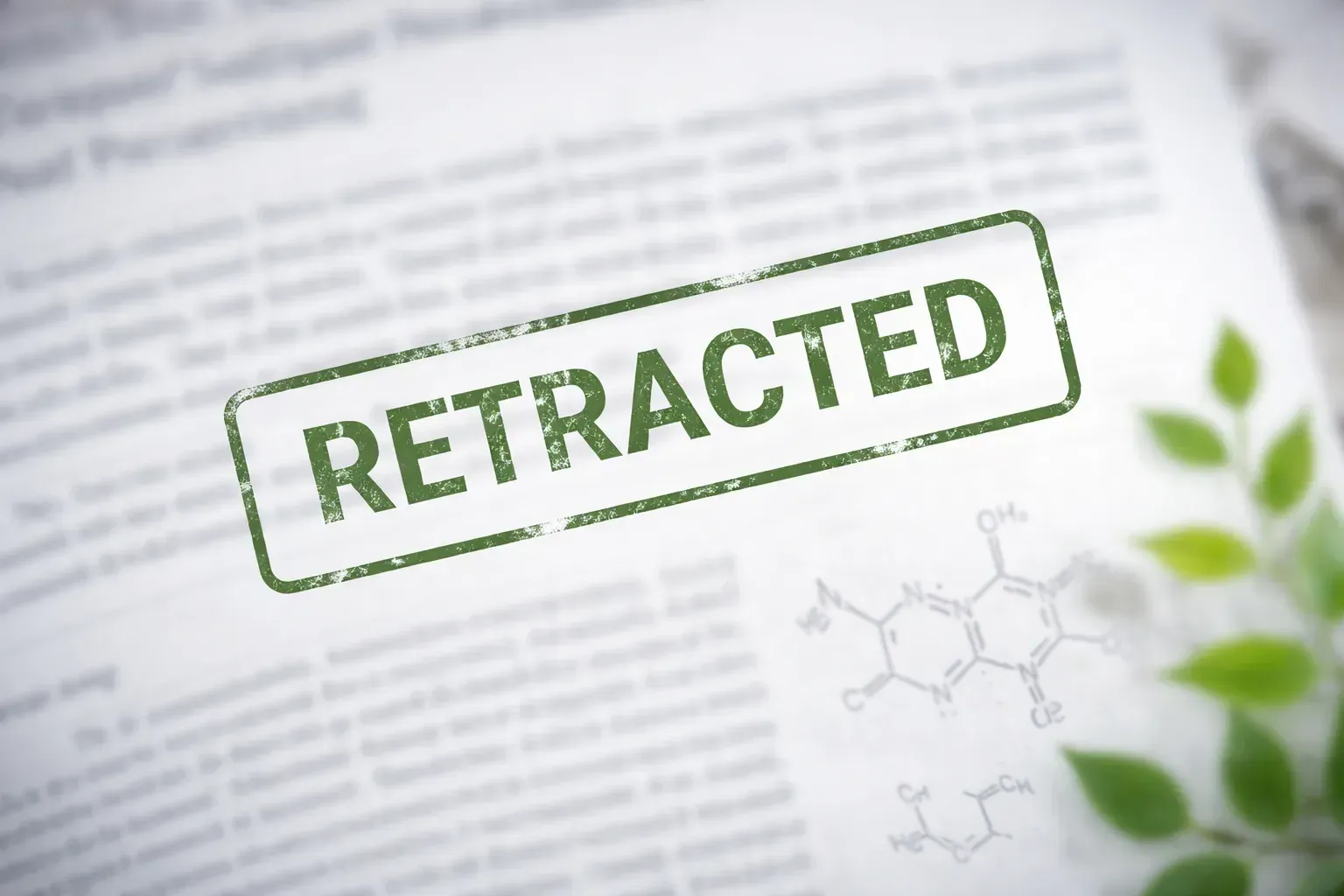
A scientific paper assessing the safety of glyphosate, the active ingredient in Roundup, was formally retracted in 2025, 25 years after its publication. The 2000 study had concluded that glyphosate was safe for humans. This has been retracted.
> READ MORE
Chronic Diseases Linked to Pesticides
Independent studies have associated pesticide exposure with increased risks of several serious health conditions.
Including:
- Leukemia
- Non-Hodgkin lymphoma
- Parkinson's disease
- Neurological damage
- Reproductive harm
- Endocrine disruption
A major review found that most studies on non-Hodgkin lymphoma and leukemia showed positive associations with pesticide exposure, with some studies also reporting dose-response relationships.
A 2025 study also found people living within one mile of a golf course had 126% higher odds of developing Parkinson's disease than those living more than six miles away.