Extensive Research Points: Why We Don’t Want the HSNO and Gene Tech Bills in NZ
NZ Is Currently GE Free - We Don't Want GE Which Goes Hand In Hand With Chemically Dependent Systems
NZ Is Currently GE Free - We Don't Want GE Which Goes Hand In Hand With Chemically Dependent Systems
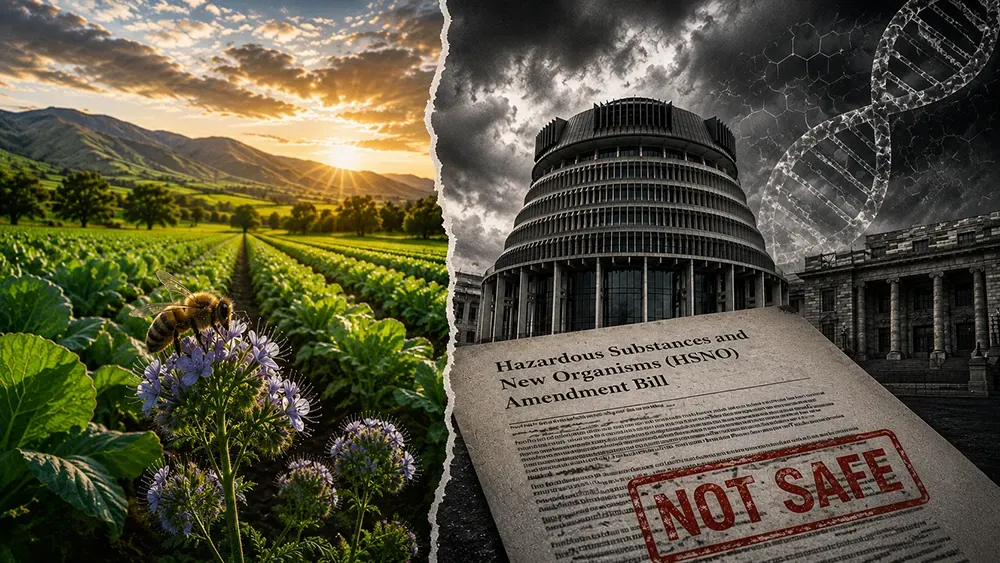
The HSNO Bill
It is anti democratic, under the bill:
•Applications are only publicly notified if the Authority wants to
•
Chemicals & GMOs can be released without full approval
View The HSNO Summary
Submission Template, Submissions close June 15, 2026
The Gene Tech Bill
Can't be made safe, under the bill:
• GE and pesticide resistant crops would be released in NZ
• Non-notifiable approvals allowed
• Reduced public notification and transparency in decisions.
• It is non democratic
Email your MP
Glyphosate
Weed Killer In Food
•
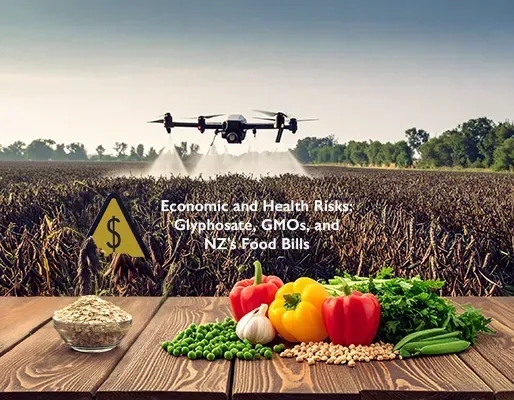
NZ proposed to raise allowed glyphosate residue levels by up to 100x in some grains (e.g. wheat) and 60× for dry field peas.
•
After public submissions, they kept the cereal limit at the old level (0.1 mg/kg), but still approved 6 mg/kg for dry peas - which is 60x higher than the current limit.
The HSNO Bill
It is anti democratic, under the bill:
•Applications are only publicly notified if the Authority wants to
•
Chemicals & GMOs can be released without full approval
View The HSNO Summary
Submission Template, Submissions close June 15, 2026
The Gene Tech Bill
Can't be made safe, under the bill:
• GE and pesticide resistant crops would be released in NZ
• Non-notifiable approvals allowed
• Reduced public notification and transparency in decisions.
• It is non democratic
Email your MP
Glyphosate
Weed Killer In Food
•
NZ proposed to raise allowed glyphosate residue levels by up to 100x in some grains (e.g. wheat) and 60× for dry field peas.
•
After public submissions, they kept the cereal limit at the old level (0.1 mg/kg), but still approved 6 mg/kg for dry peas - which is 60x higher than the current limit.

1. Glyphosate exposure is linked with increased non-Hodgkin lymphoma risk, with a cited meta-analysis reporting a 41% increase.
2. Early-life glyphosate exposure is linked to disruption of development, gut microbiome, hormone levels, and DNA integrity
3. A 2025 lifetime rat study reported the development of benign and malignant tumours following only low-dose glyphosate exposure.
“We observed early onset and early mortality for a number of rare malignant cancers, including leukemia, liver, ovary and nervous system tumors. Notably, approximately half of the deaths from leukemia seen in the glyphosate and GBHs treatment groups occurred at less than one year of age, comparable to less than 35–40 years of age in humans.”
Dr. Daniele Mandrioli, Principal Investigator, Global Glyphosate Study
4. Glyphosate is associated with memory loss, depression, hearing difficulty, poorer attention, memory, language, and inhibitory control.
5. Glyphosate was detected in 99% of pregnant women in a cited study, with higher exposure associated with shorter pregnancies.
6. Glyphosate-based herbicides are linked to liver and kidney damage from chronic ultra-low-dose exposure.
7. Pesticide exposure is associated with cancers, Parkinson’s disease, neurotoxicity, reproductive harm, and endocrine disruption.
8. People living within 1 mile of a golf course had 126% higher odds of Parkinson’s disease compared with those living more than 6 miles away.
“The association between golf course proximity and Parkinson disease was stronger in areas with vulnerable groundwater and public drinking water supplies."
“Residential proximity to golf courses was associated with increased odds of Parkinson disease, with higher odds observed among those living closer to multiple golf courses.”

9. Allowable glyphosate residues have already been significantly increased in NZ food standards (with the MRL for dried field peas set at up to 60× higher than the default level), demonstrating how regulatory change can expand permitted chemical exposure limits. The HSNO and Gene Technology bills have not yet been abolished. These bills would allow GMOs in NZ’s soil and environment, including pesticide-resistant crops as enabled by the Gene Technology Bill.
Glyphosate Increas
Gene Technology Bill
10. GE herbicide-resistant crops are linked to increased herbicide use over time because resistant weeds emerge.
Gene Escape, Superweeds and Chemical Dependence:
The Nasty GMO Problem
GE crops increased pesticide use instead of reducing it.
- A 16-year analysis of U.S. agriculture found that genetically engineered crops increased overall pesticide use by approximately 183 million kilograms (404 million pounds). Herbicide-resistant crops drove a 239 million kilogram increase in herbicide use, outweighing reductions in insecticide use.
Herbicide use surged as resistant weeds spread.
- Herbicide use on herbicide-tolerant GE crops increased from 1.5 million pounds in 1999 to 90 million pounds in 2011. Researchers linked this rise to the spread of glyphosate-resistant weeds.
More than 40 species of glyphosate-resistant weeds have emerged worldwide.
- The widespread adoption of herbicide-tolerant GE crops has been associated with the evolution of resistant "superweeds", forcing farmers to spray more often and use additional herbicides.
Farmers turned to older toxic herbicides.
- As glyphosate became less effective, growers increasingly relied on herbicides such as 2,4-D and dicamba to control resistant weeds, creating what researchers described as a "chemical treadmill".
The promised reduction in chemical use did not occur.
- The research concluded that herbicide-tolerant GE crops increased chemical dependence in agriculture rather than reducing it, raising concerns for soil health, ecosystems, and long-term sustainability.
11. Genetic engineering raises concerns about horizontal gene transfer, including antibiotic resistance, new pathogens, unintended gene interactions, and ecological disruption.
12. GE traits escape containment; feral GE canola has been found in unmanaged environments with stacked herbicide-resistant traits.
13. Organic and GE farming cannot successfully coexist because pollen drift, seed movement, and supply-chain mixing create contamination risks.
Economic and Sustainability Considerations
- New Zealand's organic sector reached approximately NZ$1.18 billion in value in 2024, demonstrating the growing demand for organic and sustainably produced food both domestically and internationally and the need to protect it the two can't co-exist.
- NZ sustainability-linked sectors, including responsible investment, tourism, sustainable construction, and organic markets, depend on trusted low-chemical food systems.
- Research into responsible investment preferences has also shown strong public support for ethical and environmentally responsible economic activity. A 2024
survey reported that 75% of New Zealanders wanted to avoid investing in companies involved in genetic engineering.
- The broader sustainability sector is also economically significant. Members of the Sustainable Business Council collectively represent approximately
NZ$169 billion in annual turnover, highlighting the scale of businesses that view sustainability and environmental responsibility
as important long-term economic priorities.
- Responsible investment: NZ$153.5 billion in ESG-aligned funds, with NZ$4.74 billion in impact investments.
Many exclude high chemical/GMO exposure;
changes could trigger divestment.
14. GE contamination threatens organic certification, export value, consumer trust, and biodiversity
15. Overseas examples show contamination occurs even where GE crops are approved only for restricted uses, such as StarLink corn entering the human food supply and LL601 rice entering commercial rice stocks.
16. StarLink corn entering the human food supply and LL601 rice entering commercial rice stocks.
17. The Brazil-nut gene soybean case demonstrated unintended allergenicity concerns. The transferred gene product was identified as a major allergen of Brazil nuts.
"Our study shows that an allergen from a food known to be allergenic can be transferred into another food by genetic engineering."

18. Bt crop residues move into waterways and harm non-target aquatic insects.
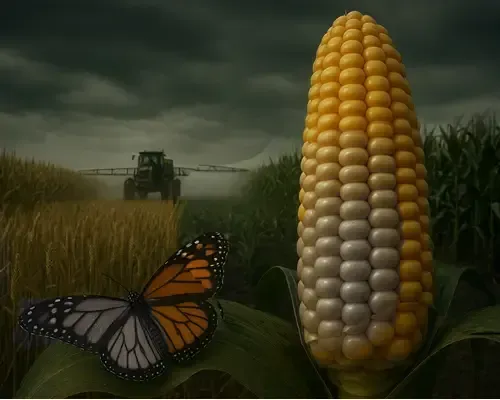
19. GE crop expansion is linked to ecological harm, including monarch butterfly decline through milkweed loss.
"Larvae of monarch butterflies fed milkweed leaves dusted with pollen from Bt corn ate less, grew more slowly, and suffered higher mortality.”
20. Bt cotton in China reduced one pest but was followed by secondary pest outbreaks, demonstrating ecosystem disruption.
Describe the item or answer the question so that site visitors who are interested get more information. You can emphasize this text with bullets, italics or bold, and add links.
Bt cotton is a genetically modified cotton that:
- Increased mirid bug severity
- Linked to reduced insecticide spraying after Bt adoption
- Was part of a “pest complex shift”

21. Dicamba-tolerant GE crops caused off-target spray damage to orchards, vineyards, vegetables, and native plants.
Dicamba damaged non-agricultural plants and trees, such as those that grow near homes and in wild areas, including a 160,000-acre wildlife refuge; and
More than 280 incident reports came from counties where additional restrictions are required to protect endangered species when dicamba is applied to dicamba-tolerant soybean and cotton crops.
EPA (USA) has reason to believe the number of incidents reported significantly understates the actual number of incidents related to dicamba use.
22. Mexico, Peru, and multiple EU regions maintain precautionary restrictions or bans on GMO cultivation.
23 Mexico’s protection of native maize demonstrates concern about threats to seed heritage and food sovereignty.
24. Organic farming is associated with approximately 50% higher organism abundance and 30% higher species richness.
25. EGlyphosate exposure is evidenced by its detection in human urine and other biofluids across occupational and general populations, indicating widespread and ongoing human exposure.
Gillezeau et al. (2019), Environmental Health
https://ehjournal.biomedcentral.com/articles/10.1186/s12940-018-0435-5
26. Evidence cited from international contexts (e.g., Argentina case discussion) links widespread glyphosate + GM crop systems with environmental contamination and increased congenital abnormalities reported in exposed regions.
Findings reported in literature examining intensive GM soybean agriculture and glyphosate use in Argentina:
- Cancer incidence and mortality reported as 2–3× higher than national averages in studied agricultural regions.
Compared with national averages, the study found:
- Spontaneous abortions: ~10% vs ~3% nationally (≈3× higher)
- Congenital abnormalities: ~3–4.3% vs ~1.4% nationally (≈2–3× higher)
Glyphosate levels were:
- Higher in town soil than surrounding rural fields
- Suggesting urban contamination from agricultural handling and spray drift
27 A glyphosate safety paper published in 2000 was retracted in 2025 following concerns about ghostwriting and scientific transparency.
Main reasons for retraction:
- Undisclosed financial ties to Monsanto
Monsanto was acquired by Bayer in 2018 - Ghostwriting by Monsanto employees
- Misrepresentation of author independence
- Reliance mainly on unpublished Monsanto-provided studies
- Omission or minimisation of other existing toxicity/carcinogenicity research available at the time
1. Glyphosate exposure is linked with increased non-Hodgkin lymphoma risk, with a cited meta-analysis reporting a 41% increase.
2. Early-life glyphosate exposure is linked to disruption of development, gut microbiome, hormone levels, and DNA integrity
3. A 2025 lifetime rat study reported the development of benign and malignant tumours following only low-dose glyphosate exposure.
“We observed early onset and early mortality for a number of rare malignant cancers, including leukemia, liver, ovary and nervous system tumors. Notably, approximately half of the deaths from leukemia seen in the glyphosate and GBHs treatment groups occurred at less than one year of age, comparable to less than 35–40 years of age in humans.”
Dr. Daniele Mandrioli, Principal Investigator, Global Glyphosate Study
4. Glyphosate is associated with memory loss, depression, hearing difficulty, poorer attention, memory, language, and inhibitory control.
5. Glyphosate was detected in 99% of pregnant women in a cited study, with higher exposure associated with shorter pregnancies.
6. Glyphosate-based herbicides are linked to liver and kidney damage from chronic ultra-low-dose exposure.
7. Pesticide exposure is associated with cancers, Parkinson’s disease, neurotoxicity, reproductive harm, and endocrine disruption.
8. People living within 1 mile of a golf course had 126% higher odds of Parkinson’s disease compared with those living more than 6 miles away.
“The association between golf course proximity and Parkinson disease was stronger in areas with vulnerable groundwater and public drinking water supplies."
“Residential proximity to golf courses was associated with increased odds of Parkinson disease, with higher odds observed among those living closer to multiple golf courses.”
9. Allowable glyphosate residues have already been significantly increased in NZ food standards (with the MRL for dried field peas set at up to 60× higher than the default level), demonstrating how regulatory change can expand permitted chemical exposure limits. The HSNO and Gene Technology bills have not yet been abolished. These bills would allow GMOs in NZ’s soil and environment, including pesticide-resistant crops as enabled by the Gene Technology Bill.
Glyphosate Increas
Gene Technology Bill
10. GE herbicide-resistant crops are linked to increased herbicide use over time because resistant weeds emerge.
Gene Escape, Superweeds and Chemical Dependence:
The Nasty GMO Problem
GE crops increased pesticide use instead of reducing it.
- A 16-year analysis of U.S. agriculture found that genetically engineered crops increased overall pesticide use by approximately 183 million kilograms (404 million pounds). Herbicide-resistant crops drove a 239 million kilogram increase in herbicide use, outweighing reductions in insecticide use.
Herbicide use surged as resistant weeds spread.
- Herbicide use on herbicide-tolerant GE crops increased from 1.5 million pounds in 1999 to 90 million pounds in 2011. Researchers linked this rise to the spread of glyphosate-resistant weeds.
More than 40 species of glyphosate-resistant weeds have emerged worldwide.
- The widespread adoption of herbicide-tolerant GE crops has been associated with the evolution of resistant "superweeds", forcing farmers to spray more often and use additional herbicides.
Farmers turned to older toxic herbicides.
- As glyphosate became less effective, growers increasingly relied on herbicides such as 2,4-D and dicamba to control resistant weeds, creating what researchers described as a "chemical treadmill".
The promised reduction in chemical use did not occur.
- The research concluded that herbicide-tolerant GE crops increased chemical dependence in agriculture rather than reducing it, raising concerns for soil health, ecosystems, and long-term sustainability.
11. Genetic engineering raises concerns about horizontal gene transfer, including antibiotic resistance, new pathogens, unintended gene interactions, and ecological disruption.
12. GE traits escape containment; feral GE canola has been found in unmanaged environments with stacked herbicide-resistant traits.
13. Organic and GE farming cannot successfully coexist because pollen drift, seed movement, and supply-chain mixing create contamination risks.
Economic and Sustainability Considerations
- New Zealand's organic sector reached approximately NZ$1.18 billion in value in 2024, demonstrating the growing demand for organic and sustainably produced food both domestically and internationally and the need to protect it the two can't co-exist.
- NZ sustainability-linked sectors, including responsible investment, tourism, sustainable construction, and organic markets, depend on trusted low-chemical food systems.
- Research into responsible investment preferences has also shown strong public support for ethical and environmentally responsible economic activity. A 2024
survey reported that 75% of New Zealanders wanted to avoid investing in companies involved in genetic engineering.
- The broader sustainability sector is also economically significant. Members of the Sustainable Business Council collectively represent approximately
NZ$169 billion in annual turnover, highlighting the scale of businesses that view sustainability and environmental responsibility
as important long-term economic priorities.
- Responsible investment: NZ$153.5 billion in ESG-aligned funds, with NZ$4.74 billion in impact investments.
Many exclude high chemical/GMO exposure;
changes could trigger divestment.
14. GE contamination threatens organic certification, export value, consumer trust, and biodiversity
15. Overseas examples show contamination occurs even where GE crops are approved only for restricted uses, such as StarLink corn entering the human food supply and LL601 rice entering commercial rice stocks.
16. StarLink corn entering the human food supply and LL601 rice entering commercial rice stocks.
17. The Brazil-nut gene soybean case demonstrated unintended allergenicity concerns. The transferred gene product was identified as a major allergen of Brazil nuts.
"Our study shows that an allergen from a food known to be allergenic can be transferred into another food by genetic engineering."
18. Bt crop residues move into waterways and harm non-target aquatic insects.
19. GE crop expansion is linked to ecological harm, including monarch butterfly decline through milkweed loss.
"Larvae of monarch butterflies fed milkweed leaves dusted with pollen from Bt corn ate less, grew more slowly, and suffered higher mortality.”
20. Bt cotton in China reduced one pest but was followed by secondary pest outbreaks, demonstrating ecosystem disruption.
https://resjournals.onlinelibrary.wiley.com/doi/10.1111/j.1752-4598.2012.00196.x
Bt cotton is a genetically modified cotton that:
- Increased mirid bug severity
- Linked to reduced insecticide spraying after Bt adoption
- Was part of a “pest complex shift”
21. Dicamba-tolerant GE crops caused off-target spray damage to orchards, vineyards, vegetables, and native plants.
Dicamba damaged non-agricultural plants and trees, such as those that grow near homes and in wild areas, including a 160,000-acre wildlife refuge; and
More than 280 incident reports came from counties where additional restrictions are required to protect endangered species when dicamba is applied to dicamba-tolerant soybean and cotton crops.
EPA (USA) has reason to believe the number of incidents reported significantly understates the actual number of incidents related to dicamba use.
22. Mexico, Peru, and multiple EU regions maintain precautionary restrictions or bans on GMO cultivation.
23 Mexico’s protection of native maize demonstrates concern about threats to seed heritage and food sovereignty.
24. Organic farming is associated with approximately 50% higher organism abundance and 30% higher species richness.
25. EGlyphosate exposure is evidenced by its detection in human urine and other biofluids across occupational and general populations, indicating widespread and ongoing human exposure.
Gillezeau et al. (2019), Environmental Health
https://ehjournal.biomedcentral.com/articles/10.1186/s12940-018-0435-5
26. Evidence cited from international contexts (e.g., Argentina case discussion) links widespread glyphosate + GM crop systems with environmental contamination and increased congenital abnormalities reported in exposed regions.
Findings reported in literature examining intensive GM soybean agriculture and glyphosate use in Argentina:
- Cancer incidence and mortality reported as 2–3× higher than national averages in studied agricultural regions.
Compared with national averages, the study found:
- Spontaneous abortions: ~10% vs ~3% nationally (≈3× higher)
- Congenital abnormalities: ~3–4.3% vs ~1.4% nationally (≈2–3× higher)
Glyphosate levels were:
- Higher in town soil than surrounding rural fields
- Suggesting urban contamination from agricultural handling and spray drift
27 A glyphosate safety paper published in 2000 was retracted in 2025 following concerns about ghostwriting and scientific transparency.
Main reasons for retraction:
- Undisclosed financial ties to Monsanto
Monsanto was acquired by Bayer in 2018 - Ghostwriting by Monsanto employees
- Misrepresentation of author independence
- Reliance mainly on unpublished Monsanto-provided studies
- Omission or minimisation of other existing toxicity/carcinogenicity research available at the time